Prepare for Battle

Combat is a massive part of D&D! Unsheathe your sword, harness your shield, nock your arrow, and mutter an incantation—it's about to go down!
Here's a quick and orderly reference from the Basic Rules:

Setup
The DM (Dungeon Master) will either run a combat encounter as Theater of Mind or provide some sort of visual—usually in the form of a battle mat.
- Theater of Mind is completely run with descriptive words and imagination—as is the majority of D&D.
- This method is more forgiving with rulings and as the DM loosely describes where Players and Enemies are located and resolves actions in a less tactical manner .
- Visual Combat is typically run on a digital or physical gridded battlemat paired with imagination.
- This method is more tactile as the rules are precise since everyone can visually calculate the distance between enemies, players, and obstacles.
- Each gridded square is equivalent to 5 ft., unless the DM declares otherwise.
DMs may present their battlemaps as simple or as extravagant as they prefer. Sometimes it depends on the scenario or their setup capabilities. Just because a D&D group plays on construction paper instead of utilizing miniature props doesn't mean their game will be any less enjoyable. While it is certainly a pretty sight, great combat isn't great solely because of wonderous terrain—it is wound up in Player agency, decision, and the dice rolls!
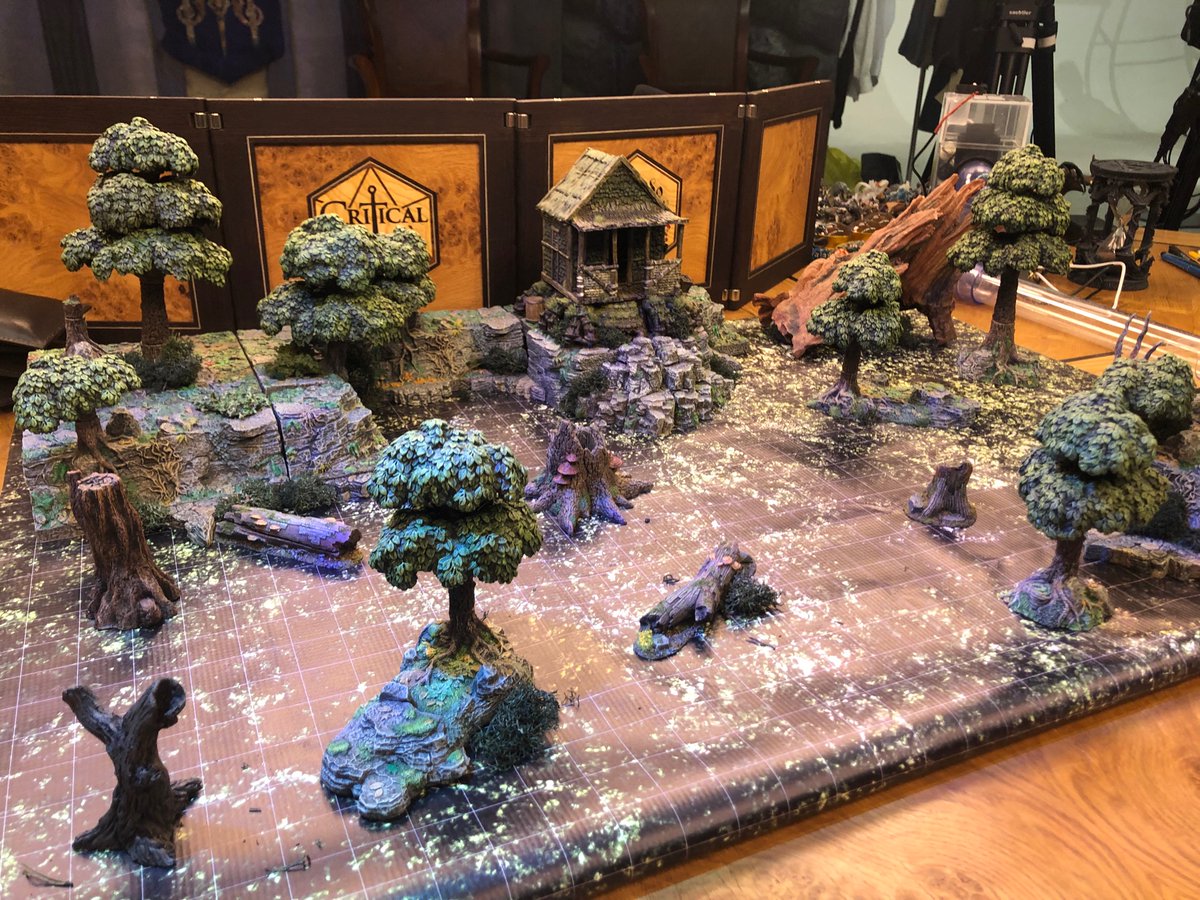
Decorative Battle Map with Miniature Props

Digital Battle Map Crafted on the Web

Wet Erase Battle Map Drawn with a Marker
How It Works
D&D Combat is a turn based activity. Once it has begun, everyone will Roll Initiative! Each Player rolls a d20 and adds their character's initiative modifier from their character sheet.

Once the DM reaches the end of the list, they'll start back at the top of their curated list and begin Round 2. Each round is divided into 6 seconds. So, anything your character does on their turn may consume up to 6 seconds of time!
Surprise!
Whether your character is sneaking up on an enemy's encampment or they managed to sneak up on yours--there's a chance that one side may gain an edge before the battle actually begins. If one side succeeds in surprising the other they'll gain a full round of combat to themselves before the enemy can retaliate!
On Your Turn

Movement
Your character may choose to move up to their speed listed on their character sheet. We'll reference our Wood Elf Ranger, Vadania, that we created previously.
As we can see on the character sheet, Vadania's walking speed is 35 ft. This means she can move up to 7 squares on the gridded battlemat.
We may also choose to have Vadania burrow, climb, fly, swim, or take cover behind an obstacle or portion of terrain. Should she take cover she'll temporarily increase their AC (Armor Class) thereby making herself harder to hit!
Available Actions

- Attack using your weapon of choice—that might even be your fists!
- Cast a Spell by muttering an incantation, life your hand upward, and sprinkle a bit of powdered herbs. Spells can help your allies or harm and hinder your foes!
- Dash allows you to run twice your movement speed!
- Disengage allows you to back away from within an enemies' fighting range and not provoke an attack of opportunity!
- Dodge causes your enemies to roll with disadvantage should they attack you until the start of your next turn. It also grants you with advantage with Dexterity saving throws should the DM call for any!
- Help allows you to lend a hand to another Player's character as they attempt to accomplish a task or fight a creature. This effectively grants them with advantage on their dice roll!
- Hide if you're not in plain sight (typically) you can roll a Stealth check and stay out of the enemies sight!
- Ready if you're uncertain what to do next or want to spring an attack on an enemy you can prepare one of the other actions listed here or move as a reaction. If the condition is met between now and your next turn, you'll instinctively perform your selected action!
- Search if you're investigating or attempting to perceive something in the midst of battle, use this action!
- Use an Object Whenever your character attempts to use an object that requires more effort and focus, you may be forced to select this option—such as manipulating a foreign artifact or device in the room.
NOTE: A Bonus Action may be available for you to utilize due to your special abilities, spells, and other features. This allows you to take an additional Action on your turn. The spell, ability, or feature will explicitly state that it's a Bonus Action within its description. (Ex: Vadania could use her bonus action to cast Hunter's Mark on a creature AND attack with her Longbow.)
 |
| Notice this spell requires Concentration (C) under Duration. |
At the end of combat, your enemies may flee or fight till their last breath! D&D battles can be unpredictable as the outcomes vary between encounters. The uncertainty of what could happen next due to Player and Enemy choices and the roll of the dice is one of the many organic qualities that make this game unique!
Next Up: Behind the Dungeon Master Screen
You can follow Simply DnD on Twitter: @SimplyDnD
Comments
Post a Comment